

Millennials run the world now.
While the consumer focus has been on Gen Z (and now Gen Alpha), we brushed over one of the most important generational cohorts: millennials.
Globally, there are 1.8 billion millennials, with approximately 74 million in the U.S. alone. They represent 23% of the global population (about 22% in the U.S.), overtaking the baby boomers as the largest living adult generation.
They’ve also become the largest group of decision-makers.
The eldest millennials are approaching their mid-40s, and the youngest are turning 30 next year (going by the 1981-1996 dates). They have stepped into positions of power across brand, media, and culture: creative directors, brand leads, platform PMs, music supervisors, booking producers, agency strategists, and editorial heads.
And because of this, we’ve started to see a millennial revival, from brand campaigns to reunion tours, with formative media references being operationalized at scale, not just consumed privately or nostalgically.
But this revival isn’t just about taste or preference; it’s a compensatory move.
Millennials were the last cohort to move through adolescence and early adulthood with a progressive media ladder, going from kids' media to teen media to young adult media to adult media. Those rungs have collapsed for Gen Z and Gen Alpha.
In other words, millennials are the last audience trained to sit with media rather than scroll past it.
So, what happens when the generation shaped by early internet culture, monocultural media moments, and pre-algorithmic discovery is now designing the system itself?
It wasn’t a phase, Mom
Over the last few years, we’ve seen a resurgence of Y2K nostalgia (I wrote about it earlier this year).
But the moment is bigger than just trend recycling. The Y2K nostalgia we’re experiencing (particularly for 2000s tech and media) signals something deeper: a generational transfer of cultural authority.
From a media standpoint, there’s been so much lost in the current media landscape: cultural moments that serve as shared reference points, life-stage media, and media used as tools for identity formation (think MySpace, Tumblr, and magazines).
Millennials were the last generation raised on pre-algorithmic media systems that:
Allowed for experimentation without permanence
Created monocultural moments versus fragmented virality
Shaped taste through scarcity versus sameness through abundance
Curated content editorially versus algorithmically
Millennial media was slow, episodic, and built identity over time, characterized by things like CDs (instead of streaming), 22-episode seasons (versus 8-12-episode mini-series), and magazines (versus short-form social media content). There was more added friction in our media consumption. We had to yearn for the next album, issue, or season, instead of battling an algorithmic feed that prioritizes speed and slop over narrative continuity.
Identity was explored through characters, fandoms, and third spaces. It was formed through choosing whether you were Team Edward or Team Jacob, which member of One Direction you were crushing on, or how you were developing your Final Fantasy character. Now, it’s all about self-performance, with identity created not based on what we as individuals like, but what we as a collective like.
Moreover, brand safety moderation has flattened the edge, irony, nuance, and subculture signaling that once gave millennial media taste and texture. Millennial classics like White Chicks, Mean Girls, or even Kanye West are essentially canceled in today’s media landscape for the themes, topics, and content they explore.
No longer the audience, but the architects
Millennials now wield decision-making and purchasing power, running the functions we as consumers see and interact with daily: brand leadership, creative direction, platform teams, and editorial desks. They are no longer just consuming culture; they’re creating it.
Millennial decision-makers also perceive risk differently than both Boomers and Gen Z. Boomer-led culture is optimized for longevity and brand safety. Gen Z-led culture often optimizes for immediacy, irony, and hyper-relevance.
Millennials sit in between. They value cultural resonance, emotional familiarity, and social proof, but they’ve lived through enough disruption to crave stability. When they choose references, they’re choosing things that feel culturally pre-fracture. Pre-2008. Pre-algorithm. Pre-everything-being-content.
Their formative media memory shapes what they perceive as “good,” “safe,” and “effective.” As a result, they look for recognizable IP and shared memory. References that feel emotionally stable yet culturally cool. Brand experiences that worked before metrics cannibalized creativity. A culture that moved forward together.
Now, as decision-makers, millennials are unconsciously trying to recreate those conditions within a system that no longer supports them. The revival is not about the past. It’s an attempt to restore continuity in a fragmented present.
That’s why we’re seeing a return to human- and story-driven experiences—they skew optimistic and communal rather than edgy or experimental, which we’re seeing at the peak of the AI slop era.
Millennials are making decisions within constrained systems: shrinking budgets, risk-averse executives, diverse audiences, and declining attention spans. Revivals function as a safe bet, a way to guarantee resonance in a low-trust media environment.
Revivals as an institutional signal
We’ve seen this millennial revival show up in recent brand campaigns, like Lancôme’s Juicy Tubes, the performance selections in this year’s Macy’s Thanksgiving Day Parade, reunion tours, and actors like Christy Carlson Romano partnering with brands like Bath & Body Works.

While these may seem like another nostalgic or ironic play, they tell us that these cultural moments weren’t just fads; they cemented that millennial culture has crossed from subcultural memory into mainstream American culture.
Lancôme’s recent Juicy Tubes campaign represents something bigger than just a Y2K beauty callback. Where the campaign featured some of the biggest stars of the 2000s, it’s a nod to the playful, unserious nature of beauty before it was optimized for algorithmic virality or clinical credibility. Millennials grew up before beauty was fully professionalized into skincare-as-morality and influencer-as-expert. The revival is a reclaiming of frivolity as value.

Lancôme’s Juicy Tube campaign featured 2000s actors like Chad Michael Murray, Ed Westwick, and Paris Hilton.
On the other hand, the Macy’s Thanksgiving Day Parade is one of the most conservative cultural stages in America and is considered a broadcast ritual. This year’s parade set an all-time viewership record with 34.3 million total viewers, an 8% increase from 2024, making it the most-watched entertainment telecast in nearly seven years. It showed strong growth across all demos, especially young viewers. And rightfully so. The performance lineup included millennial music favorites such as Lil Jon, Busta Rhymes, Shaggy, and Gavin DeGraw.
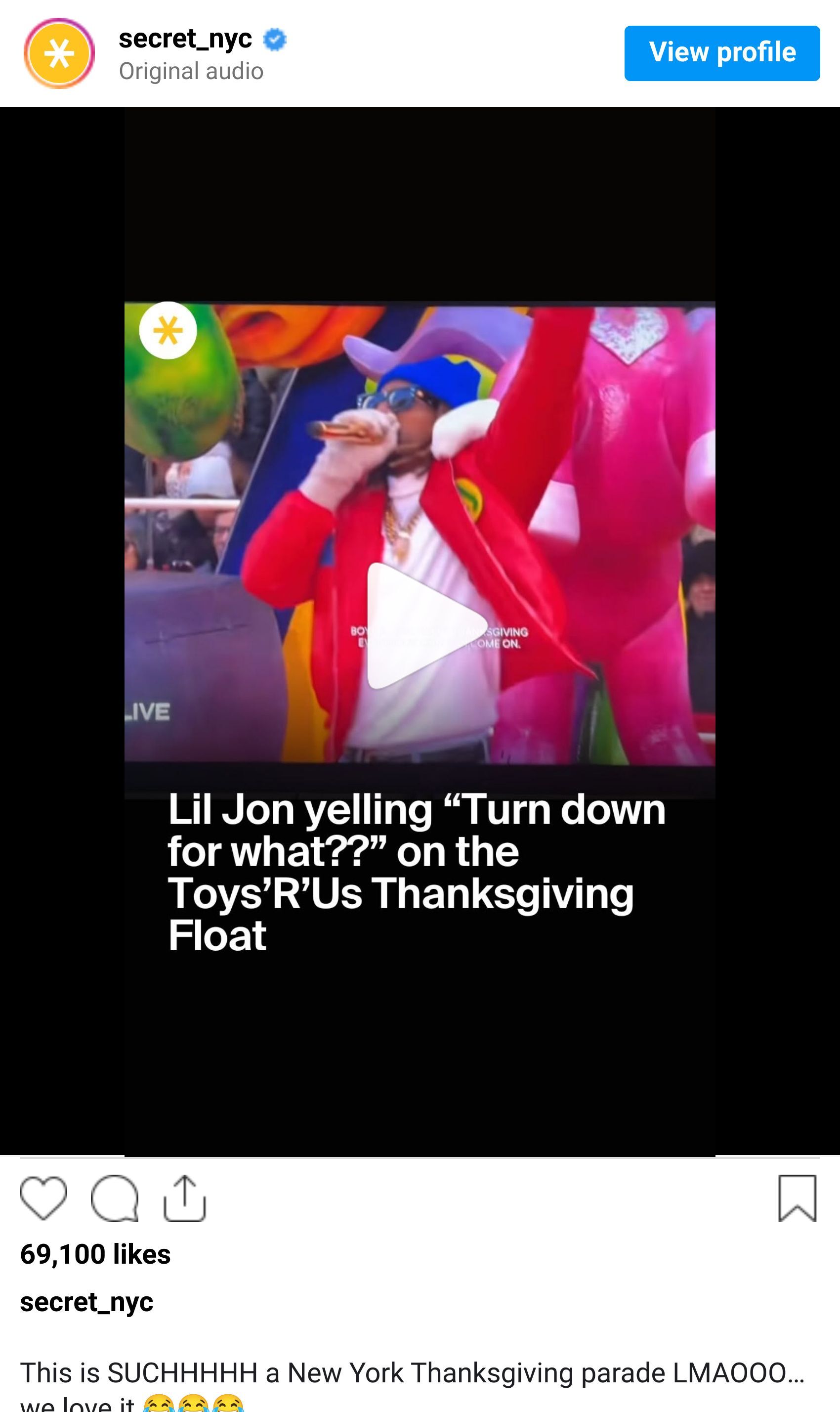
And when nostalgia migrates from niche campaigns to legacy institutions, it’s no longer nostalgia. It’s part of the culture.
A desire to rebuild what worked
Millennials are rebuilding the world they trusted. And they are using media to do it. They aren’t just reviving what they like; they’re rebuilding elements of cultural scaffolding that today’s media landscape is missing based on what they experienced: identity exploration, monocultural moments, taste, and curation—but for a modern, digitally-native audience.
The media revival is an attempt to recreate the conditions in which they formed identity, in hopes that it might translate to younger generations. It’s emotionally driven, not just capitalizing on another trend. It’s not about being referential; it’s about being innovative to drive culture forward, not keep us stuck in the past.
It’s why we’re seeing a resurgence of media formats like magazines and zines. This will also make brands think about distribution and content formats, especially from a marketing perspective. Millennials research, buy, and consume content differently from their predecessors, which means creators and marketers need to think differently about how to reach them. This means experimenting with different content formats such as podcasts, newsletters, and YouTube.
Gen Z is already responding well to this type of media. They want slow media. They want to be offline and in third spaces. They’re taking an interest in analog media. They want storytelling. They’re craving something that feels more human, authentic, and real.
For millennials, it feels familiar. But for Gen Z, this revival represents what the future of media could look like, a place where being online and consuming content can be fun rather than a borderline public health hazard riddled with burnout, brainrot, and self-esteem issues. With millennials in power, Gen Z and Gen Alpha finally have a chance to experience what media was like before the algorithm.